Norway stretches over 2,500 kilometres from its southern tip to the far north – roughly the distance from Oslo to Rome, or from New York to Denver. That single fact explains most of the confusion first-time visitors have when planning a trip: the country isn’t one landscape, it’s several, strung along a coastline that takes days to drive end to end. Trying to see all of it in a week is how people end up exhausted in rental cars instead of standing still somewhere good.

This is a practical breakdown of Norway’s main regions – what defines each one, who it suits, and how they connect – so you can build a trip around two or three of them properly rather than skimming all of them at once. For the full planning detail on seasons, budgeting and getting around, the complete Norway travel guide is the starting point; this piece goes deeper on the where.
Eastern Norway: cities, valleys, the road west
Eastern Norway is where most international flights land, and it’s easy to treat Oslo as a short stopover before heading for the fjords. That undersells it. Oslo is compact, walkable and sits directly on its own fjord, with forested hills beginning where the city ends – full detail in the guide to things to do in Oslo, and the best time to visit Oslo for month-by-month planning.


North of the capital, Gudbrandsdalen is the region most visitors drive through rather than stop in, which is a mistake. The valley runs for over 200 kilometres from Lillehammer, wide and green rather than dramatic, with stave churches and farmsteads that have been receiving guests for generations. If your image of Norway is all vertigo and fjord walls, Gudbrandsdalen is the corrective.
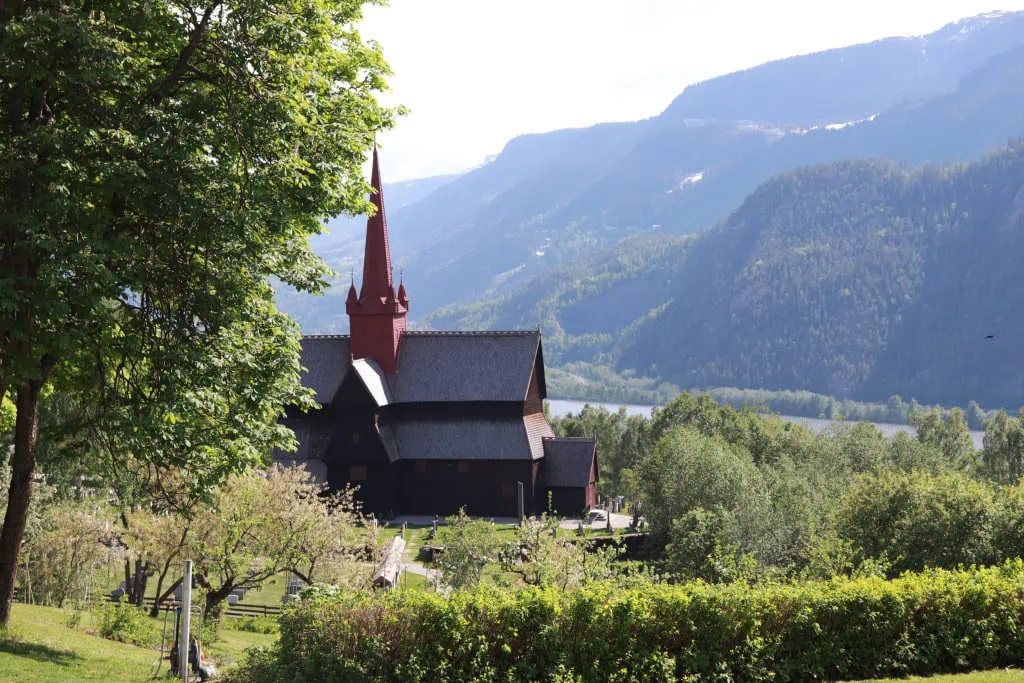
Best for: first and last days of a trip, folklore and culture, an easier pace before or after the fjords.
Western Norway: the fjord country
This is the Norway of postcards, and the region carries two of the country’s genuinely UNESCO-listed fjords – Geirangerfjord and Nærøyfjord, both part of the West Norwegian Fjords World Heritage listing. Bergen is the natural base: Norway’s second city, built at the foot of seven mountains, with the Hanseatic-era wharf Bryggen forming its old harbour front.

From Bergen, Hardangerfjord is roughly ninety minutes east – 179 kilometres of fjord lined with waterfalls, orchards and small cider producers, best explored by RIB boat into the sections with no road access. Further north, Ålesund adds something different again: an Art Nouveau town rebuilt after a 1904 fire, with a 418-step climb to the Fjellstuen viewpoint for a panorama over the islands.

This region rewards slow travel more than any other in Norway – the Bergen Railway and the short, steep Flåm Railway down to the fjord are both worth building a day around rather than treating as transit.
Best for: classic fjord scenery, boat trips, a mix of small towns and one proper city.
Central Norway: the quieter middle
Trondheim doesn’t get the visitor numbers of Bergen or Oslo, which is part of its appeal. Norway’s medieval capital sits where the Nidelva river meets the Trondheimsfjord, with a food scene that’s earned serious attention in the past decade and a Viking-era history that’s easier to feel here than almost anywhere else in the country. It’s a strong add-on if you’re already travelling between Oslo and the north, rather than a standalone destination for a first trip.
Best for: returning visitors, food-focused travel, breaking up a longer north–south route.

Northern Norway: the Arctic
Everything changes above the Arctic Circle. In Lofoten, an archipelago of sea-sharpened peaks rising straight out of the water, the sun doesn’t fully set through most of the summer, and fishing villages like the ones around Svolvær still run on cod as much as on tourism. Tromsø, 350 kilometres further north again, operates on its own calendar: two months of winter darkness broken by the aurora overhead, and a summer where the sun doesn’t set at all from mid-May to late July.

The trade-off for this region is distance and time. Getting here usually means a domestic flight – Oslo to Bodø for Lofoten is around 1.5 hours – and locals will tell you honestly that trying to combine the north with the western fjords in under ten days means losing a full day each way to travel. Better to pick one region and do it properly – the season-by-season guide to Norway breaks down exactly when the midnight sun and northern lights are visible here.

Best for: midnight sun or northern lights specifically, wildlife and Arctic landscapes, travellers who’ve already done a first Norway trip.
Fjords or Lofoten – how to choose
This is the question that comes up most often, so it’s worth answering directly. The western fjords offer more infrastructure – more towns, more restaurants, more places to stay, and a shorter drive from Bergen or Oslo. Lofoten offers something starker: fewer roads, more dramatic peaks rising directly from the sea, and villages like Reine and Nusfjord that feel more remote because they are.


If you have one week, fjords are the easier trip. If you have two, or you’ve already done a fjords trip before, Lofoten is where to go next.
How the regions connect
Norway’s domestic flight network is quick and reasonably priced if booked ahead – Oslo to Ålesund is under an hour, Oslo to Bodø around 1.5 hours. By car, distances are longer than they look on a map because roads follow the coastline and fjords rather than cutting straight through, so budget more driving time than a straight-line distance would suggest. Ferries connect several coastal routes and are worth building into an itinerary rather than avoiding – some of the best views in the country are from a car deck.

Quick guide
Hotels – Each region has a different accommodation character, from Oslo’s design hotels to Lofoten’s rorbuer. Search hotels by region.
Experiences – Region-specific tours (RIB safaris, glacier walks, eagle safaris) are worth booking ahead in summer. Browse regional tours.
Transport – For multi-region trips, compare a rental car against a domestic flight plus local transfers – both are covered in the full travel guide. Compare rental car prices.
Frequently asked questions
Frequently asked questions
For a week, one or two. For two weeks, three is realistic if you’re not trying to reach the far north and the fjords in the same trip.
Western Norway, for the combination of fjord scenery, Bergen as an easy base, and manageable distances. If you have 10 days you can also add Oslo.
Not in under ten days – the two regions are far apart, and travel time between them eats into the trip more than most people expect.
The western fjords and Oslo area, though “mild” is relative – pack for rain regardless of region or season.