By the time you’re standing on Norwegian ground – whether it’s the calm, Scandi-looking arrivals hall in Oslo or the surprisingly small airport on an island in Lofoten – you understand that this country doesn’t oversell itself. There are no flashy billboards, no aggressive tourist infrastructure at the airport doors. Just cool air, vivid colours, and the quiet sense that wherever you’re going, it’s worth the trip.
This guide covers everything you need to know before you go: where to go, when to visit, what things cost, how to get around, what the food is like, and what to pack. It’s also your starting point for all the Norway content on this site – each destination and experience has its own full guide, linked throughout.

The Norwegians have a concept – friluftsliv – outdoor life, time spent in nature as a way of living rather than a weekend activity. You feel it immediately when you travel here. People are on the water, on the trails, sitting outside cafés in evening light that runs past ten, eleven, midnight. In July, temperatures sit comfortably between 72 and 77°F. The pace is different. The air is different.
Where to go in Norway
Norway is long – far longer than most maps suggest. You won’t cover it all in one trip, and you shouldn’t try. For a closer look at how the regions differ and how to choose between them, see our guide to Norway’s regions.
Eastern Norway
Oslo – the capital of Norway
A walkable, compact capital on the Oslofjord, with a reimagined waterfront, world-class museums and forested hills that begin where the city ends. Oslo is also the natural starting point for driving west.
Full guide: Things to do in Oslo
Gudbrandsdalen
Most people drive through Gudbrandsdalen on their way somewhere else. That’s a mistake. The valley runs north from Lillehammer for over 200 kilometres, wide, green, unhurried, flanked by low forested ridges rather than dramatic peaks.
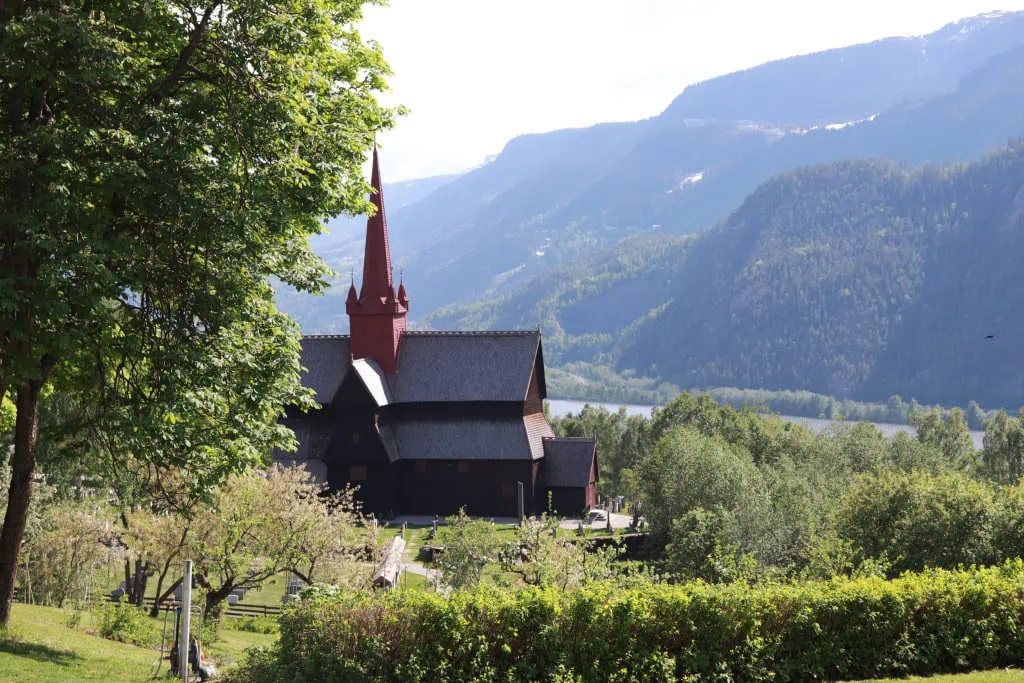
It’s the opposite of what most people picture when they think of Norway: no fjords, no vertigo. Just deep farmland, stave churches and a food tradition that has been running quietly for centuries.
Central Norway
Trondheim
Norway’s third-largest city and its medieval capital, Trondheim, sits where the Nidelva river meets the Trondheimsfjord and has been the country’s most important city at various points in its history. Think Vikings, Christianity, and a great food scene.
Full guide: Trondheim

Western Norway
Bergen
Norway’s second-largest city sits at the base of seven mountains at the end of a long fjord. It has the lived-in confidence of a place that’s been a trading hub since the Middle Ages. The old wharf, Bryggen, is UNESCO-listed – rows of colourful wooden buildings from the Hanseatic era that look almost painted against the hillside.

Take the Fløibanen funicular up to Mt. Fløyen for the panorama, explore the covered fish market by the harbour, and give yourself an evening in one of the restaurants that have made Bergen worth eating in on its own terms. Bergen is also the natural gateway to the Hardangerfjord, an hour and a half to the east.
Full guide: Bergen: things to do
Ålesund
An Art Nouveau city on the west coast, rebuilt after a fire in 1904 and unlike anywhere else in Norway. Walk up 418 steps to the Fjellstuan viewpoint for a panorama of the city, sea and mountains.
Full guide: Ålesund and the lighthouse

Hardangerfjord
One of Norway’s four UNESCO-listed fjords, 179 kilometres long, is lined with waterfalls and flanked by orchards and small apple farms, producing cider and jam. The RIB safari takes you by boat to the innermost parts of the fjord – places with no road access – with a guide who knows the local history and exactly how close you can get to a waterfall before you need to close your mouth.

Northern Norway
Lofoten archipelago
An archipelago above the Arctic Circle where mountains rise straight from the sea, and the sun doesn’t fully set in summer.
Full guide: Svolvær and the eagle safari

Tromsø
Tromsø sits 350 kilometres above the Arctic Circle and operates at a different register from the rest of Norway.
In winter, it’s one of the world’s best places to see the northern lights. The city itself stays dark for two months, and on clear nights, the aurora moves overhead while you’re standing on the waterfront with a coffee.
In summer, the sun doesn’t set at all from mid-May to late July, and the light at midnight over the Arctic fjords is something that takes a while to fully believe.
Guide: Tromsø in summer

When to visit Norway
Summer (June – August) is the most popular window, and for good reason. In July, Oslo and eastern Norway reach 72–77°F. Further north, in Lofoten and Tromsø, temperatures are typically closer to 61–65°F, with cooler evenings year-round. July is peak season and peak price, but late May, June and August offer similar conditions with slightly fewer visitors.
West coast weather is more unpredictable year-round, so always pack a waterproof layer.
Spring (April – May) bring longer days, lower prices and Hardanger’s orchards in bloom (May). The 17th of May – Norwegian Constitution Day – is worth being in Oslo for if your dates align.
Autumn (September – October) turns the forests around Oslo and the mountains golden, and brings this soft golden light. The weather is, however, very unstable, and can be all sunny for the whole of September or all rainy. Lofoten in September has fewer visitors, dramatic skies, and early aurora borealis on clear nights.
Winter (November – March) is the northern light season. Tromsø is the natural base, well-connected by flights, with guided aurora tours operating most clear nights. Lofoten in winter is spectacular, but best left to experienced winter drivers.
If Oslo is your starting point, the guide to the best time to visit Oslo covers each season in detail — weather, events, crowds and costs month by month.
Getting to Norway
By train, the Bergen Railway from Oslo to Bergen is one of the most scenic rail journeys in Europe and is worth doing if Bergen is on your route. The Flåm Railway (Flåmsbana) is a steep, short tourist line down to the fjord – impressive in its own right.
By car is the recommended way to travel. Roads are well-maintained, distances are manageable, and the drive itself is part of the experience. Tolls are charged automatically to the license plate – ask your rental company how they handle billing.

Ferry crossings appear on several routes; check sailing times in advance. Norway’s EV charging network is excellent and often faster than in other parts of Europe.
Domestic flights are quick and affordable when booked ahead. Oslo to Ålesund is under an hour; Oslo to Bodø (for Lofoten) is 1.5 hours.
Where to stay
Norway’s accommodation range is wider than its reputation suggests. In Oslo and Bergen, the options run from polished design hotels to intimate boutique properties – the kind of places with a bar worth sitting in and a breakfast that actually justifies the price.
Outside the cities, the picture changes: Lofoten has traditional rorbuer, converted fishermen’s cabins on stilts above the water, that are among the more atmospheric places to sleep anywhere in Europe. The Hardangerfjord region has small family-run guesthouses and hotels with fjord-facing rooms. In Gudbrandsdalen, historic farmsteads have been receiving guests for generations.
As a rule, book early for summer. July fills quickly at the better properties, and the places worth staying at don’t have unlimited rooms. Each destination guide on this site includes specific hotel recommendations with direct booking links, but if you want a starting point, Hotels.com covers the full country and lets you filter by area and budget.
What to budget
Norway has long had a reputation for being expensive, and in Norwegian kroner, it is. But the Norwegian currency has been weak against major currencies such as the dollar, euro, and pound for several years, trading at around 10 NOK to the dollar.
What sounds steep in local terms often lands at a reasonable price once you convert: a dinner priced at 800 NOK is $80. A hotel night at 2,500 NOK is $250.
For comfortable, upscale travel, budget roughly $250–350 per person per day to cover accommodation, food, activities, and fuel.
• Hotels: $180–300 per night for a double room with breakfast
• Meals: Lunch $15–25, dinner with wine $70–100 per person
• Guided activities: $80–150 per person, depending on activity
• Museums: $15–25 entry; Oslo Pass covers most for 24/48/72 hours
Norwegian food and drink
Norwegian food has changed considerably in the past fifteen years, and eating well here, particularly outside the capital, often means ingredients that came from the water or hillside you’re looking at.
Fish and seafood are foundational: salmon, Arctic char, cod, shrimp. In Lofoten, wind-dried stockfish is a tradition that goes back to the Viking Age. Mountain lamb, grazed freely on summer herbs, is worth seeking out in Gudbrandsdalen.

Hardanger cider has arrived as a serious regional product. You can combine a tasting with the RIB safari.
Norwegian bakeries do excellent sourdough and cardamom buns; stop when you see a good one. Coffee is taken seriously, and it is good.

One practical note: wine and spirits are sold only at state-run Vinmonopolet shops, which close on Sundays and early on Saturdays. Buy what you need when you see one.
Practical tips
Language. English is spoken fluently in most places. A few words of Norwegian (takk – thank you) are always appreciated.
Payments. Norway is effectively cashless. Contactless card payments work everywhere, including markets and ferries.
Tipping. Not at all obligatory, especially if the service was only average. You can round up or leave 10% at restaurants for good service, which is generous and appreciated.
Safety. Norway is one of the safest countries in Europe. Solo female travel, including remote areas like Lofoten, is entirely normal.
Tap water. Safe to drink everywhere in Norway – tap water is clean throughout the country, including in small towns and rural areas. No need to buy bottled water. Bring an empty bottle you can fill up.
Driving. A valid driver’s license from the US, EU, UK and most other countries is accepted. Norway drives on the right. Tolls are charged automatically to the license plate – ask your rental company how these are billed.
Electricity. Type F plugs, 230V. Bring a plug adapter; a universal adapter covers all of Europe.
Mobile data. An eSIM through Airalo* is the most cost-effective option for longer stays.
What to pack
Norwegian weather layers! The west coast can shift from sun to horizontal rain in under an hour – you want clothes that adapt, not resist.
Norwegian outdoor brands make some of the best cold-weather and travel clothing available. These are worth having before you go, and you can get all of them on Amazon:
- Devold merino base layer* – regulates temperature, dries fast, stays fresh for days
- Helly Hansen rain jacket* – packable, non-negotiable for the West Coast
- Dale of Norway wool sweater* – practical and one of the most memorable souvenirs you can buy
- Wool socks* – the most underrated item in a Norway packing list
- Thin merino gloves for spring, summer and fall* – takes up no space, earns its keep on any boat trip or mountain drive with the windows down
- Merino wool beanie* – evenings in Lofoten and on the fjord can be much cooler than the calendar suggests
- Lightweight outdoor trousers* – quick-drying, packable; far more useful than jeans on boats, trails and rainy harbour walks
- Waterproof walking shoes* – coastal paths and waterfall walks involve wet stone
This article contains affiliate links. If you book through them, we earn a small commission, which helps keep Travelletters running. We only recommend places and products we’d point a friend toward.
Frequently asked questions
Think layers, not bulk. Norwegian weather — especially on the west coast — can move from warm sunshine to cold rain within the same afternoon, and evenings on the fjord or a boat trip are reliably cooler than the date on the calendar suggests.See the full packing list above for specific recommendations.
It depends on what you’re after. For fjords, midnight sun and the full outdoor experience, late June through August is the window. For the northern lights, plan for November through February. May and September are excellent shoulder months with fewer visitors, lower prices and beautiful light in both directions.
Yes! Norway is one of the most reliable places in the world to see them. The season runs from late September through March, with January and February offering the longest dark hours. Tromsø is the most accessible base, with guided tours operating on most clear nights.
Citizens of the US, EU, EEA, UK, Canada and Australia can visit Norway for up to 90 days without a visa. Norway is part of the Schengen Area, which means the same rules apply across most of Europe. If you’re traveling from outside these regions, check the Norwegian Directorate of Immigration (udi.no) for the current rules for your passport.
Not at all. Norway is one of the easiest countries in Europe to travel on your own terms. English is spoken everywhere, card payments work everywhere, and the infrastructure – trains, ferries, domestic flights, well-signed roads – is reliable and straightforward. You don’t need a guided tour to see the fjords, hike the trails or find good food. Most of the experiences on this site are things you arrange yourself, at your own pace.
The Sognefjord (near Flåm) is Norway’s longest and deepest, well-known, and excellent for cruises. The Hardangerfjord is gentler, more pastoral, with orchards and waterfalls along the banks. The Geirangerfjord (near Ålesund) is narrow, steep-walled and intensely dramatic. The Nærøyfjord is UNESCO-listed and feels almost enclosed. None is definitively best. They’re different experiences and worth choosing based on what else is on your itinerary.
It depends on what you’re after. Oslo alone deserves at least two full days, three if you want to slow down. The western fjords, Ålesund and Hardangerfjord, add another four to five days comfortably. Add Lofoten and you’re looking at 12–14 days for a proper trip. For a northern lights visit to Tromsø, three to four days is enough. Two weeks in Norway, however you split it, is not time you will regret.
Where to start
Oslo and the drive west – city highlights, mountain valleys, the road to the sea
Ålesund and the lighthouse – Art Nouveau city, island beaches, Alnes lighthouse
Hardangerfjord and the RIB safari – waterfalls, fjord villages, the best guided boat experience in Hardanger
Lofoten and the eagle safari – midnight sun, sea eagles, the archipelago at the edge of the world

You may also like


